


Rawalpindi has been one of Pakistan’s most important gold trading hubs for generations, and if you are searching for the best gold jewellers in Rawalpindi, you already know how overwhelming the choice can feel. Between the narrow lanes of Sarafa Bazar, the busy showrooms of Raja Bazaar, and the newer branded jewellery chains spreading across Saddar and Committee Chowk, the city offers everything from centuries-old family businesses to modern, air-conditioned bridal jewellery stores.
But with so many options, how do you actually find a trusted gold jeweller in Rawalpindi who sells pure, hallmarked gold at a fair price, without inflated making charges or hidden purity issues? This guide walks you through the city’s most well-known gold jewellery shops, what makes Rawalpindi’s gold market unique, and the exact things you should check before buying gold jewellery — whether it’s an everyday gold ring, a wedding set, or an investment piece of 22K or 24K gold.
Why Rawalpindi Is Famous for Gold Jewellery
Long before Islamabad existed as the twin city, Rawalpindi was already a major trading centre in the region. Its gold and jewellery trade grew around Sarafa Bazar, tucked inside the older commercial belt near Raja Bazaar, which remains the beating heart of the city’s gold business to this day. “Sarafa” itself is an old term used across South Asia for a bazaar or street where gold, silver, and precious metals are bought, sold, and crafted.
What makes Sarafa Bazar Rawalpindi different from a typical shopping street is its density of specialists. Within a few hundred metres, you will find goldsmiths who only make bangles, others who specialise in bridal sets, wholesalers who supply smaller jewellers across Punjab, and old family shops that have served the same customer families for three or four generations. This concentration means healthy competition on price, and it is one of the reasons people travel from Islamabad, Attock, Jhelum, and even further to buy gold jewellery in Rawalpindi rather than in their own cities.
Alongside Sarafa Bazar, the last two decades have seen the rise of larger, branded jewellery showrooms — many of them located in Saddar, Bank Road, and the commercial areas closer to Committee Chowk. These stores tend to offer a more standardised buying experience: fixed pricing boards, hallmark certification, card payments, and sometimes online catalogues, which appeal to buyers who want convenience over bazaar-style bargaining.
What Makes a Gold Jeweller Trustworthy?
Before looking at specific names, it helps to understand exactly what separates a reliable gold jeweller from one you should avoid. In Pakistan’s gold market, the difference often comes down to a handful of practical factors.
1. Hallmarking and Purity Guarantees
A genuine gold jeweller should be transparent about the karat of gold you are buying — typically 18K, 21K, 22K, or 24K in the Pakistani market. Reputable shops will either hallmark their jewellery or provide a purity certificate, and many established Rawalpindi jewellers explicitly advertise that their pieces are crafted in hallmarked 22K or 24K gold. If a shop is reluctant to discuss purity testing or refuses to let you verify the karat independently, treat that as a warning sign.
2. Transparent Making Charges
Gold jewellery pricing in Pakistan is generally calculated as the current gold rate (per tola or per gram) plus a separate “making charge” that covers the craftsmanship. This making charge can vary significantly between a mass-produced design and an intricate handmade bridal set. A trustworthy jeweller will break this down clearly rather than quoting a single vague total.
3. Buyback and Exchange Policy
One of the most important, and most overlooked, factors when choosing a gold jeweller is their buyback and exchange policy. Since gold is often treated as both jewellery and an investment in Pakistani households, ask upfront how the shop handles resale — whether they deduct the full making charges, a partial amount, or none at all, and whether old gold can be exchanged for new designs.
4. Reputation and Longevity
In a market like Rawalpindi’s, longevity is a meaningful signal. Several of the city’s most recognised jewellers have been trading for 30, 40, or even more than 70 years, passed down through family generations. A shop that has survived changing gold rates, economic cycles, and generations of customers has generally earned that trust the hard way.
5. Customer Reviews and Word of Mouth
Because gold purchases are high-value and emotionally significant — especially for weddings — reviews and personal recommendations carry a lot of weight in this market. Look at how a jeweller is spoken about locally, not just on their own website, but on platforms like Google reviews, Facebook pages, and community forums.
Top Gold Jewellers in Rawalpindi Worth Knowing
Based on reputation, longevity, and specialisation, here are some of the most well-known names in Rawalpindi’s gold jewellery market.
Gold Star Jewellers (Sarafa Bazar, Rawalpindi)
Gold Star Jewellers is located in the Sarafa Bazar area of Rawalpindi, near Urdu Bazar, and has been trading since 1947. With decades of continuous operation, it has built a name around fancy and contemporary gold jewellery designs, including rings, bracelets, chains, bangles, and earrings. Its long presence right in the historic gold trading lane makes it a natural starting point for anyone exploring Sarafa Bazar for the first time.
Altaf Jewellers
Altaf Jewellers positions itself as one of the leading Gold Jewellery retailers in the Rawalpindi–Islamabad twin cities, with a particular focus on 21K gold jewellery designed for weddings and special occasions. The brand built one of the earlier organised jewellery showrooms in Rawalpindi, moving away from the traditional bazaar-counter format toward a more structured retail experience.
Sonika Jeweller (Sadar, Rawalpindi)
Based in the Sadar area, Sonika Jeweller has established itself as a prominent name for both gold and diamond jewellery in the city, offering a wide selection that appeals to buyers looking for more than just plain gold pieces — particularly those interested in stone-studded or diamond-accented designs alongside traditional gold sets.
Nowroze Ali Jewellers
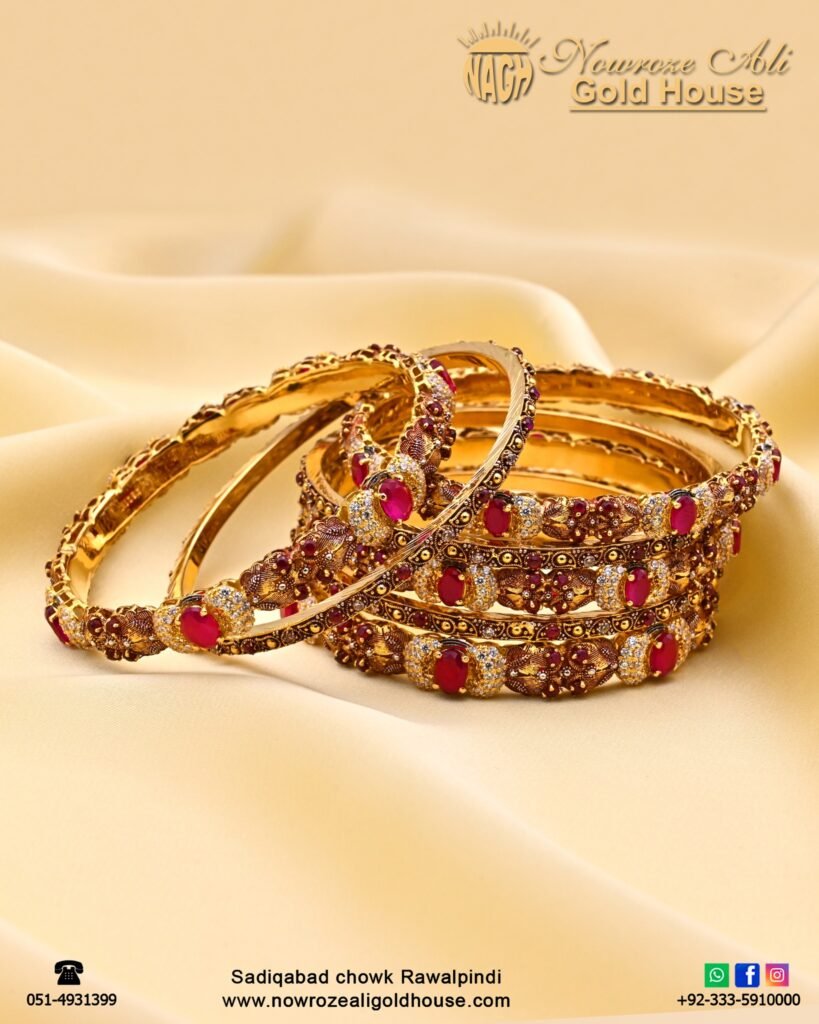
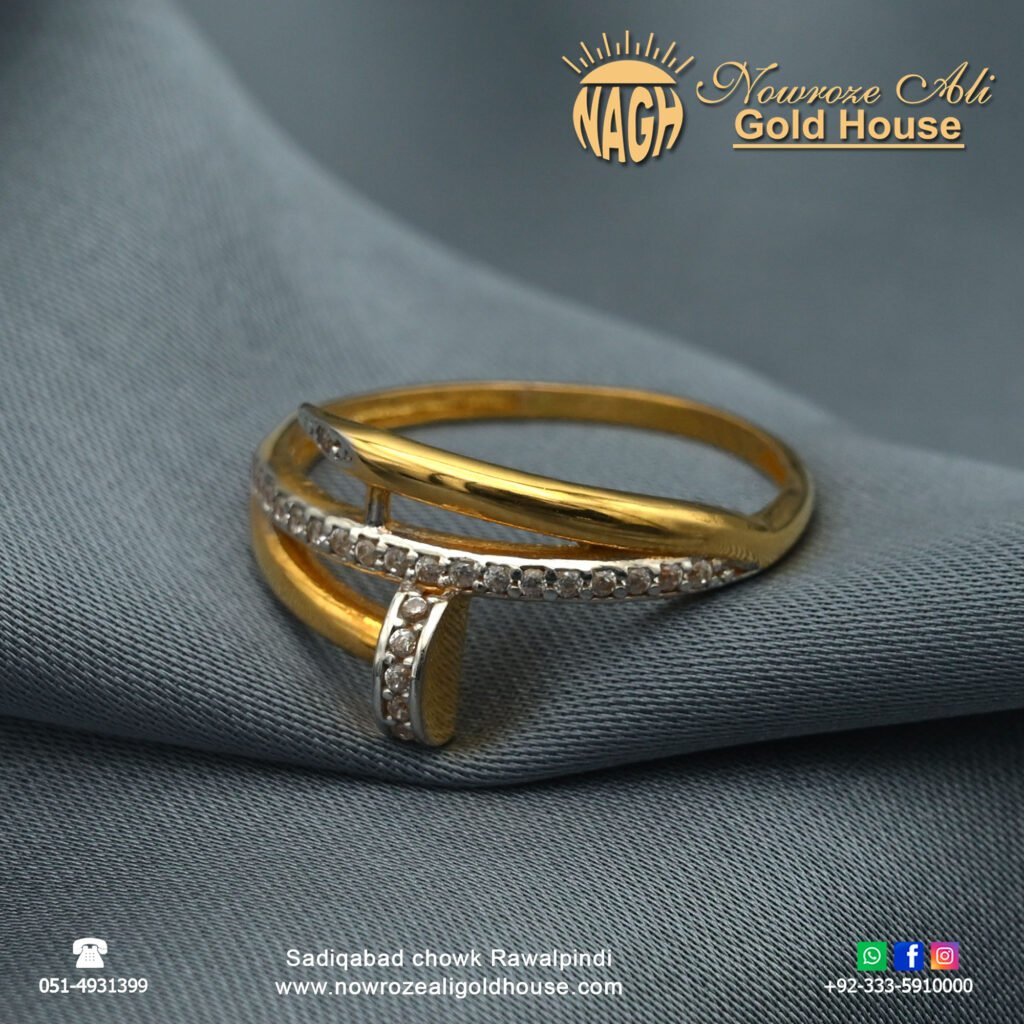
Nowroze Ali Jewellers is known for a broad catalogue spanning necklaces, pendants, bangles, earrings, and rings, with designs that blend traditional aesthetics with more modern styling. For buyers who want a wide range of everyday and special-occasion gold pieces under one roof, this is a name that comes up frequently in local recommendations.
GR Patiala Jewellers
GR Patiala Jewellers has built its reputation particularly around bridal and wedding jewellery, working with 22K and 24K gold. Customer feedback for this shop tends to highlight fair pricing and the quality of bridal sets specifically, making it a popular stop for families preparing for a wedding rather than everyday gold shopping alone.
Welcome Jewellers (Since 1990)
Welcome Jewellers has been operating in Rawalpindi since 1990, offering gold, diamond, and platinum jewellery. It has positioned itself at the more premium end of the market, combining traditional craftsmanship with contemporary bridal and gemstone collections, and it emphasises authenticity and purity guarantees across its pieces.
New Al Noor Jewellers
Operating as an independent, family-run business with roughly four decades of experience, New Al Noor Jewellers focuses on both diamond and gold jewellery. Family-run shops like this one are common in Rawalpindi’s gold trade, and their longevity is often the strongest indicator of consistent service quality over the years.
Zaib Jewellers (Since 1990)
Also trading since 1990, Zaib Jewellers has built a reputation for gold and diamond jewellery aimed at international quality standards, appealing to buyers who want globally-styled designs alongside more traditional Pakistani gold sets.
It’s worth noting that this list reflects some of the more prominently recognised names in Rawalpindi’s gold market, but it isn’t exhaustive — Sarafa Bazar alone is home to dozens of smaller shops and goldsmiths, many of which serve loyal, multi-generational customer bases without a strong online presence at all.
Sarafa Bazar vs. Modern Gold Jewellery Showrooms: Which Should You Choose?
One of the biggest decisions buyers face in Rawalpindi isn’t just which jeweller to pick, but which type of gold shopping experience suits them better.
Sarafa Bazar and Raja Bazaar offer a traditional, bazaar-style experience. Prices here can sometimes be more negotiable, especially for straightforward designs sold closer to gold-plus-making-charge rates, and many shops here also function as wholesalers, meaning smaller retailers across the city and region actually buy their stock from this area. The trade-off is that the environment is crowded, informal, and can be intimidating for first-time buyers who aren’t familiar with gold pricing or the local etiquette of bargaining.
Modern showrooms, often found in Saddar and other commercial pockets of the city, tend to offer a more comfortable, fixed-price experience with clearer certification, better lighting to inspect jewellery, card payment options, and sometimes online browsing before an in-store visit. This convenience typically comes with a slightly higher price point compared to bazaar rates, since it reflects overheads like retail space, staff, and marketing.
For first-time buyers, wedding shopping, or anyone who wants a guaranteed hallmark and a documented purchase, a modern showroom is often the more comfortable route. For seasoned buyers who know how to evaluate gold and want the best possible price on simpler designs, Sarafa Bazar remains hard to beat.
Understanding Gold Rates Before You Buy
Gold jewellery in Pakistan is priced against the live gold rate, which fluctuates daily based on international bullion prices and the local currency’s exchange rate against the US dollar. Prices are usually quoted per tola (11.66 grams) or per gram, and separately for 24K, 22K, and sometimes 21K or 18K gold.
Before visiting any jeweller — whether in Sarafa Bazar or a branded showroom — it’s worth checking the day’s gold rate independently. Many Rawalpindi jewellers, including several mentioned above, display live gold rates on their own websites or social media pages, which is a useful way to cross-check what you’re being quoted in-store. Since gold rates can shift even within the same day depending on global market movement, buying on a day when rates are relatively stable, rather than during a sharp spike, can make a noticeable difference to the final price you pay.
Tips for Buying Bridal and Wedding Jewellery in Rawalpindi
Wedding jewellery purchases are usually the single largest gold transaction a family makes, so a little extra preparation goes a long way.
Start early. Bridal sets, especially custom or heavier designs, can take time to craft properly. Visiting jewellers a few months ahead of the wedding date gives you room to compare designs, get quotes from multiple shops, and place custom orders if needed, rather than rushing a decision close to the event.
Compare at least three jewellers. Because making charges and design markups vary so much between shops, getting quotes from a traditional Sarafa Bazar jeweller, a mid-range showroom, and a premium bridal specialist gives you a realistic sense of where the actual value lies for the specific design you want.
Ask about customisation. Many Rawalpindi jewellers, particularly those specialising in bridal sets, are willing to adjust an existing design — changing stone colours, adding or removing motifs, or resizing pieces — often at a smaller additional cost than a fully custom design from scratch.
Clarify the return or exchange window. Wedding jewellery sometimes needs last-minute resizing or design tweaks. Confirm before purchase whether the jeweller allows exchanges or adjustments within a set period after the sale.
Keep documentation. Ask for a receipt that specifies the weight, karat, and making charges separately. This becomes important both for insurance purposes and if you ever need to resell or exchange the jewellery later.
Everyday Gold Buying Tips for Rawalpindi Shoppers
Not every gold purchase is for a wedding. For everyday pieces — a simple ring, a pair of gold studs, a thin chain — a slightly different approach helps.
Weigh the piece in front of you and confirm the karat before finalising a price. Reputable shops will not hesitate to do this openly. If you’re buying gold partly as a small investment rather than purely for its design, simpler, lower-making-charge pieces like plain bangles or coins tend to hold resale value better than heavily embellished designs, since intricate work usually adds a making charge that isn’t recovered when reselling.
It’s also worth building a relationship with one or two trusted jewellers over time rather than buying from a different shop every time. Regular customers in Rawalpindi’s gold market often report better transparency, more flexible exchange terms, and first look at new designs, simply because the shop values a repeat, known customer more than a one-time buyer.
Common Mistakes to Avoid When Buying Gold in Rawalpindi
Even experienced buyers slip up occasionally, and a few recurring mistakes tend to cost Rawalpindi shoppers the most money.
Shopping only on gold rate day spikes. International gold prices can jump noticeably within a single week, sometimes within a single day. Buyers who rush to purchase jewellery the moment they decide on a design, without checking whether the current rate is unusually high, often end up paying more than necessary. A quick comparison against the rate from the past few days can reveal whether it’s a good time to buy or worth waiting a little.
Ignoring making charges until the final bill. It’s easy to focus entirely on the gold rate and forget that making charges can add a meaningful percentage on top, particularly for detailed bridal designs. Always ask for the making charge as a separate line item before agreeing to a price, rather than accepting a single bundled figure.
Not asking about stone value separately. For jewellery that includes stones, kundan work, or enamel detailing, the price you’re quoted often blends gold weight, stone cost, and craftsmanship into one number. Ask the jeweller to separate these so you understand exactly what you’re paying for, especially since stones don’t hold resale value the way gold does.
Skipping a second opinion on unfamiliar shops. If you’re buying from a jeweller you haven’t used before, particularly a smaller shop in Sarafa Bazar without a strong online presence, it’s reasonable to have the piece weighed and its karat checked independently, either through a jewellery appraiser or a second jeweller, before finalising a large purchase.
Overlooking the paperwork. A verbal assurance about purity or weight means little without a proper receipt. Insist on documentation that lists the exact weight, karat, and price breakdown, since this protects you if there’s ever a dispute about what you actually bought.
Buying under social or time pressure. Wedding season in particular can create pressure to finalise a purchase quickly, especially when relatives are involved in the decision. Where possible, separate the emotional urgency of the occasion from the financial decision, and give yourself room to walk away and compare prices elsewhere if a deal doesn’t feel right.
The Role of Sarafa Bazar in Rawalpindi’s Wider Gold Economy
It’s worth understanding that Sarafa Bazar isn’t just a retail destination — it functions as a wholesale and craftsmanship hub that supplies gold jewellery to smaller shops across Rawalpindi, Islamabad, and the wider Potohar region. Many of the goldsmiths working within the bazaar produce jewellery that ends up sold under different shop names elsewhere in the city, which is part of why prices and designs can look remarkably similar even between shops that appear unrelated on the surface.
This wholesale character also explains why bargaining tends to be more accepted in Sarafa Bazar than in fixed-price showrooms. Shopkeepers here are often working on thinner margins across higher sales volume, rather than the higher-margin, lower-volume model of a premium bridal showroom. Understanding this distinction can help you set realistic expectations about how much room there actually is to negotiate, depending on which type of jeweller you’re standing in front of.
Frequently Asked Questions About Gold Jewellers in Rawalpindi
Where is the main gold market in Rawalpindi? The main gold trading area is Sarafa Bazar, located within the wider Raja Bazaar commercial zone, which has served as the city’s central gold and jewellery hub for decades.
Is it cheaper to buy gold jewellery from Sarafa Bazar than from a branded showroom? Generally, yes, bazaar-style shops tend to have lower overheads and can offer more room for negotiation, especially on simpler designs, though branded showrooms often provide clearer certification and a more standardised buying experience.
What karat of gold is most commonly sold in Rawalpindi? 22K gold is the most widely used standard for jewellery in Rawalpindi and across Pakistan, with 24K typically reserved for coins, bars, or investment-style pieces, and 21K or 18K sometimes used for lighter, more affordable designs.
How can I check if a jeweller in Rawalpindi is trustworthy? Look for clear hallmarking or purity certification, a transparent breakdown of making charges, a documented buyback or exchange policy, and a track record of positive customer reviews or long-standing operation in the city.
Do Rawalpindi jewellers offer designs for both men and women? Yes, most established gold jewellers in the city carry designs for both, including men’s rings, kara bracelets, and chains, alongside the wider range of women’s bangles, earrings, necklaces, and bridal sets.
Can I get custom gold jewellery designs made in Rawalpindi? Many jewellers, particularly in Sarafa Bazar and bridal-focused showrooms, offer custom design services, allowing customers to bring reference designs or request adjustments to existing pieces.
Final Thoughts
Choosing the best gold jeweller in Rawalpindi really comes down to matching your priorities — price, convenience, certification, or specialisation in bridal jewellery — with the right type of shop. The city’s Sarafa Bazar offers decades, and in some cases nearly a century, of trading history and remains the go-to destination for buyers who know how to evaluate gold and want the sharpest prices. Meanwhile, established showrooms like Altaf Jewellers, Welcome Jewellers, GR Patiala Jewellers, and others have built their reputations on more standardised, certified buying experiences that suit first-time buyers and wedding shoppers alike.
Whichever route you choose, the fundamentals stay the same: verify the karat, understand the making charges, ask about buyback terms, and lean on genuine local reputation rather than marketing alone. Gold jewellery in Rawalpindi isn’t just a purchase — for most families, it’s a long-term asset and a piece of a much larger tradition, and taking the time to buy it thoughtfully pays off well beyond the day you walk out of the shop.