


Introduction
In the bustling bazaars of Rawalpindi, where the scent of spices mixes with the glint of polished metal, one piece of jewelry has stood the test of time: the gold kara. Known by many names — kada, kara, or simply “the bangle” — this circular ornament holds a place in Pakistani culture that goes far beyond mere decoration. It is a symbol of tradition, a marker of status, a form of savings, and, for many families, a piece of inherited history passed from one generation to the next.
Rawalpindi, the twin city of Islamabad and one of Punjab’s oldest urban centers, has long been recognized as a hub for gold trading and jewelry craftsmanship. Its narrow lanes packed with jewelry shops, particularly around the old city’s traditional markets, draw buyers from across the region who come searching for authentic, well-crafted gold ornaments. Among all the pieces on display — necklaces, earrings, rings, and bridal sets — the gold kara occupies a special place because of its simplicity, durability, and deep-rooted cultural meaning.
This article explores everything there is to know about the gold kara in the context of Rawalpindi: its history, cultural significance, the craftsmanship behind it, how prices are determined, what to look for when buying one, and practical advice for anyone considering purchasing this classic ornament.
What Exactly Is a Gold Kara?
A kara is a solid or semi-solid bangle, typically thicker and heavier than the delicate bangles worn purely for fashion. Unlike thin, decorative bangles that are often sold in sets of a dozen or more, a kara is usually worn as a single piece or in a pair, and its weight and craftsmanship are meant to be noticed. The word “kara” itself has roots in South Asian languages and traditionally referred to a plain metal bangle, often associated with religious or ceremonial significance, particularly within Sikh tradition where the steel kara is one of the five articles of faith. Over time, however, the term has broadened in common usage across Pakistan and North India to refer to any thick, sturdy bangle — gold, silver, or steel — worn by men or women.
In the Pakistani context, and particularly in cities like Rawalpindi, “gold kara” most commonly refers to a thick gold bangle worn by men as a symbol of masculinity, wealth, and tradition, though women’s versions — often more ornately designed — are equally popular. It differs from typical bridal or fashion bangles in that it is meant to be a long-term, durable piece rather than a seasonal accessory.
The Cultural Significance of the Gold Kara
Jewelry in South Asian culture rarely exists purely for aesthetic purposes. It carries meaning, marks milestones, and often serves as a form of movable wealth that can be sold or pawned in times of need. The gold kara fits squarely into this tradition.
A Symbol of Status and Strength
For men, wearing a gold kara has historically been associated with strength, confidence, and social standing. In many families, a father gifts his son a gold kara upon reaching adulthood, marriage, or achieving a significant milestone such as completing education or starting a business. The weight and thickness of the kara often become subtle indicators of the family’s prosperity, and it is not uncommon for men in business or agricultural communities to wear a kara as a quiet display of success.
A Marker of Marriage and Family Ties
In many wedding traditions across Punjab, including in Rawalpindi’s surrounding communities, the exchange of gold ornaments between families is a central part of the ceremony. A gold kara may be presented to the groom by the bride’s family, or exchanged as part of a broader set of jewelry gifted during engagement or wedding rituals. This exchange is not just decorative — it represents the joining of two families and often functions as a form of financial security handed to the new couple.
Gold as a Store of Value
Beyond symbolism, gold jewelry in Pakistan functions as a practical financial asset. Given the fluctuations of the local currency, historical experience with inflation, and limited access to formal investment vehicles for many households, gold has remained one of the most trusted stores of value across generations. A gold kara, because of its substantial weight compared to thinner jewelry pieces, is often viewed as a more efficient way to hold savings in gold form. Families sometimes purchase a kara specifically with resale or emergency liquidation in mind, knowing that gold retains value and can be sold relatively quickly when needed.
Rawalpindi’s Gold Market: A Historical Overview
Rawalpindi’s reputation as a jewelry and gold trading center did not develop overnight. The city has functioned as a commercial crossroads for centuries, sitting along historic trade routes connecting Punjab with the northern regions of what is now Khyber Pakhtunkhwa and beyond into Afghanistan and Central Asia. This positioning made it a natural hub for merchants dealing in precious metals, textiles, and other valuable goods.
Over the decades, Rawalpindi’s old city developed dedicated markets where goldsmiths and jewelers set up their shops side by side, creating dense commercial clusters that allowed buyers to compare designs, prices, and craftsmanship all within walking distance. These markets became known simply through word of mouth as the place to go for anyone in the region seeking gold jewelry, whether for a wedding, a religious occasion, or simply as an investment.
Today, these traditional markets continue to operate alongside more modern jewelry showrooms, but much of the trade still relies on personal relationships between families and specific jewelers — relationships that, in many cases, span multiple generations. A family might return to the same jeweler their grandparents used, trusting that shop’s reputation for honest weighing, accurate purity, and fair pricing.
Craftsmanship: How a Gold Kara Is Made
Understanding the process behind crafting a gold kara helps explain both its value and the pricing structure buyers encounter.
Selecting the Gold
The process begins with selecting gold of a specific purity, measured in karats. Pure gold (24 karat) is very soft and not practical for daily-wear jewelry, as it bends and scratches easily. For this reason, most gold karas are made using 21 or 22 karat gold, which mixes pure gold with small amounts of other metals such as copper or silver to increase durability while still maintaining a high gold content. Some karas, particularly those intended more for investment than daily wear, may be made closer to 24 karat purity, though these are typically simpler in design.
Shaping the Bangle
Traditional goldsmiths, often working in small family-run workshops attached to or near the main shop, melt the gold and pour it into molds or work it by hand using techniques passed down through generations. The kara is shaped into its circular or slightly oval form, with the thickness and weight determined by how much gold is used. Some karas are solid throughout, making them heavier and more expensive, while others are made hollow or semi-hollow to reduce weight and cost while maintaining a similar outward appearance.
Detailing and Finishing
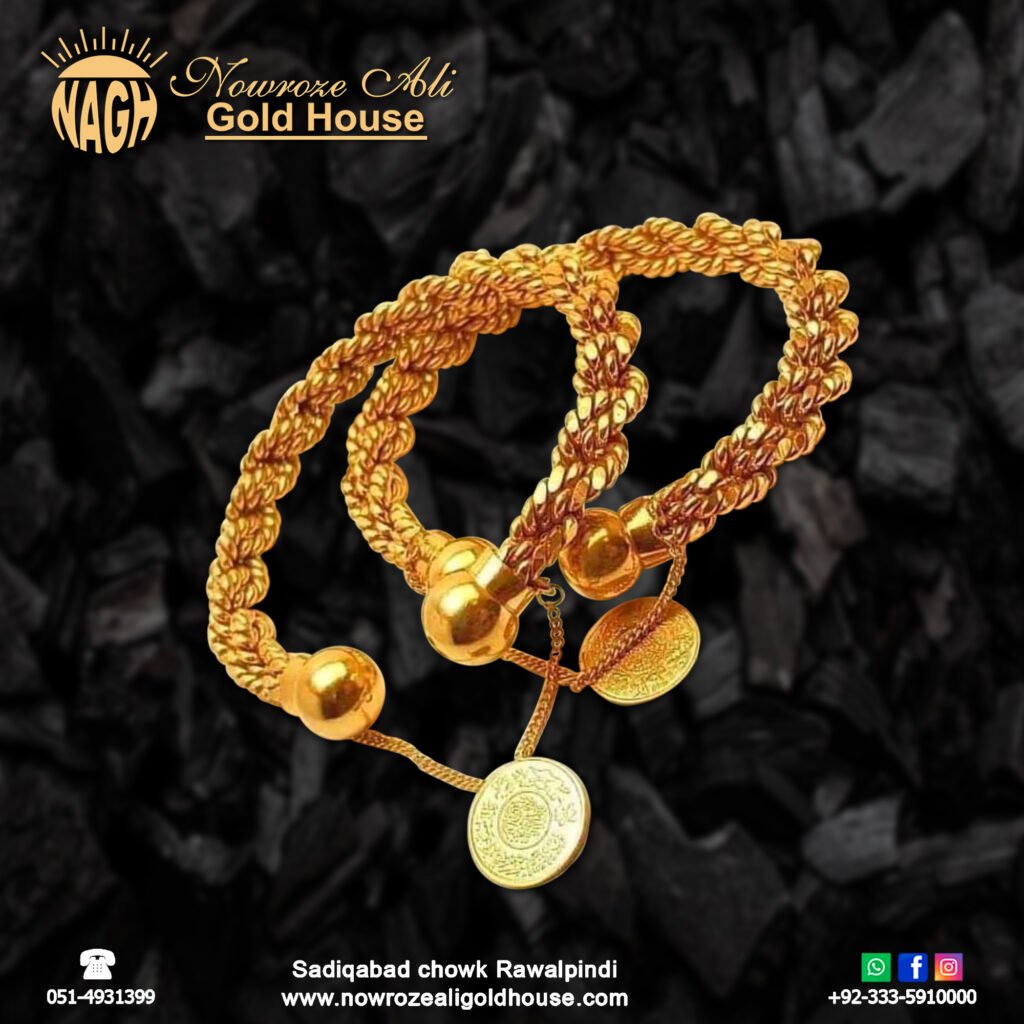
Depending on the design, the kara may then undergo additional detailing — engraving patterns, adding textured finishes, or in some cases embedding small gemstones or enamel work for decorative versions worn by women. Men’s karas tend to favor simpler, more masculine designs: smooth surfaces, subtle engraved patterns, or a slightly twisted rope-like design. Women’s karas, by contrast, often include more elaborate engravings, filigree work, or paired stone settings.
Polishing and Quality Control
The final steps involve polishing the piece to a high shine and checking its weight and purity against the required standard. Reputable jewelers in Rawalpindi will stamp or hallmark the piece to indicate its karat value, though buyers should be aware that not all sellers maintain the same standards of accuracy, which is why verification matters.
Understanding Gold Purity and What It Means for Price
One of the most important things a buyer needs to understand before purchasing a gold kara is the karat system, since it directly affects both durability and price.
- 24 Karat (99.9% pure gold): The purest form of gold, soft and more prone to scratching or bending. Rarely used for karas meant for regular wear, but sometimes chosen by buyers purely for investment purposes.
- 22 Karat (91.6% pure gold): A popular choice for traditional jewelry in Pakistan, offering a strong balance between purity and durability. Many gold karas sold in Rawalpindi’s markets fall into this category.
- 21 Karat (87.5% pure gold): Extremely common across South Asia and the Middle East, slightly more durable than 22 karat while still maintaining a rich gold color.
- 18 Karat (75% pure gold): More durable and often used for pieces that involve more intricate detailing or gemstone settings, though less common for traditional karas, which are usually valued for their gold content over design complexity.
The higher the karat, the higher the price per gram, since more of the piece’s weight consists of pure gold. Buyers looking for karas primarily as a financial asset often prefer higher karat options, while those buying for everyday wear and durability may lean toward 21 or 18 karat versions.
What Determines the Price of a Gold Kara
Several factors combine to determine the final price a buyer pays for a gold kara in Rawalpindi, and understanding these components helps prevent overpaying or misunderstanding a quoted price.
The Daily Gold Rate
Gold prices are set internationally and fluctuate daily based on global markets, currency exchange rates, and local demand. Jewelers in Rawalpindi, like across Pakistan, follow the official daily gold rate published by local jewelers’ associations, which is typically quoted per tola (a traditional unit of weight equal to approximately 11.66 grams) or per gram, and per karat.
Weight of the Kara
Since karas are generally heavier than other jewelry items, their weight has a significant impact on price. A heavier kara naturally costs more, as more gold is used in its construction. Buyers should always insist on seeing the exact weight measured on a certified scale at the time of purchase.
Making Charges (Labor Cost)
Beyond the raw value of the gold itself, jewelers charge a making fee that covers the labor, craftsmanship, and design work involved in producing the piece. This charge can vary significantly depending on the complexity of the design — a plain, smooth kara will have lower making charges than one with intricate engravings or embedded stones. Making charges are typically calculated either as a fixed amount per piece or as a percentage of the gold’s value.
Design Complexity
More elaborate designs, particularly those intended for women or bridal sets, involve more skilled labor and time, which increases the making charges. Simpler, minimalist karas designed primarily for everyday wear or investment purposes tend to carry lower additional costs beyond the base gold value.
Wastage Charges
Some jewelers also apply a “wastage” charge, which accounts for gold lost during the crafting process (through melting, shaping, and polishing). This is a traditional practice in the trade, though the percentage charged can vary from shop to shop, making it worthwhile for buyers to ask directly and compare.
Buying a Gold Kara in Rawalpindi: A Practical Guide
For anyone planning to purchase a gold kara in Rawalpindi, a few practical steps can help ensure a fair and satisfactory transaction.
1. Check the Daily Gold Rate Beforehand
Before visiting any shop, it is wise to check the current gold rate for the day, since this rate serves as the baseline for calculating the price of any piece. Local jewelers’ associations typically publish daily rates, and having this information beforehand prevents any confusion or potential overcharging.
2. Insist on Weighing in Front of You
Reputable jewelers will weigh the kara on a certified scale directly in front of the customer. This transparency ensures the buyer knows exactly how much gold they are paying for and avoids any disputes later.
3. Ask for Purity Verification
Buyers should ask whether the piece has been tested for purity and request to see any hallmark or certification stamp. Many established shops in Rawalpindi’s traditional markets use standardized testing methods, and some may offer to test the gold using acid testing or electronic purity testers upon request.
4. Clarify Making Charges Upfront
Since making charges can vary widely between shops and designs, it is important to ask for a clear breakdown of the total price — how much is attributed to the gold itself, and how much represents the making or labor charge. This transparency allows for easier price comparison between different jewelers.
5. Request a Receipt with Full Details
A proper receipt should include the weight of the gold, its karat purity, the rate used for calculation, and the making charges separately listed. This documentation is not just useful for record-keeping but also becomes important if the buyer ever wishes to resell or exchange the piece.
6. Compare Multiple Shops
Given the density of jewelry shops in Rawalpindi’s markets, it is common practice — and generally encouraged — to visit more than one shop before finalizing a purchase. Comparing designs, prices, and making charges across a few different sellers often results in better value and helps buyers develop a sense of fair market pricing.
7. Consider the Reputation of the Jeweler
Many families in Rawalpindi rely on generational relationships with specific jewelers, trusting shops that have served their parents or grandparents. For newcomers or those without an established relationship, asking for recommendations from friends, family, or local community networks can help identify reliable sellers known for honest dealings.
Gold Kara for Men vs. Women: Design Differences
While the gold kara is worn by both men and women in Pakistani culture, the design conventions differ noticeably between the two.
Men’s Gold Karas
Men’s karas tend to prioritize weight, thickness, and a bold, understated appearance over intricate detailing. Common design elements include:
- Smooth, polished surfaces with minimal engraving
- A rounded or slightly flattened cross-section for comfort during daily wear
- Occasional twisted rope-style patterns
- Simple geometric engravings rather than floral or decorative motifs
The emphasis for men’s karas is often on the sheer gold content and weight rather than elaborate craftsmanship, aligning with the tradition of the kara as a display of substance and strength.
Women’s Gold Karas
Women’s versions, by contrast, often embrace more elaborate detailing, including:
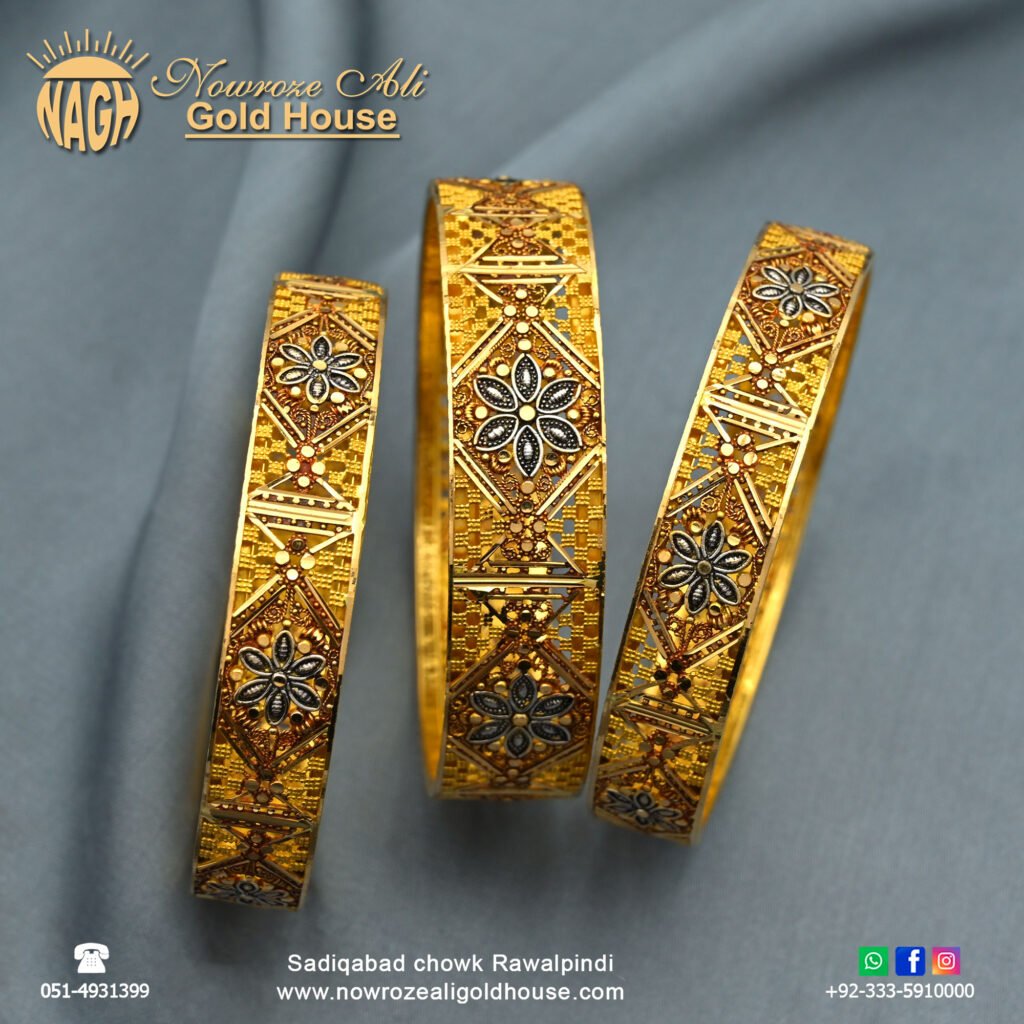
- Fine engraved floral or paisley patterns
- Filigree work creating intricate, lace-like textures
- Sometimes paired with small gemstones, enamel accents, or contrasting metal inlays
- Slimmer profiles compared to men’s versions, though still noticeably thicker than standard fashion bangles
These differences reflect broader patterns in South Asian jewelry design, where women’s pieces often emphasize decorative artistry while men’s pieces emphasize solidity and understated strength.
Occasions for Gifting or Wearing a Gold Kara
The gold kara appears across numerous occasions in Pakistani social and family life, each carrying its own significance.
Weddings
Wedding ceremonies remain one of the most common occasions for gifting a gold kara, whether from the bride’s family to the groom or as part of broader jewelry sets exchanged between families. It often symbolizes not just wealth but the formal bonding of two families through marriage.
Religious and Cultural Celebrations
During religious festivals or significant cultural events, families sometimes choose to gift gold karas to mark the occasion, particularly to sons or male relatives reaching important life milestones.
Coming of Age
In some families, presenting a young man with his first gold kara marks a transition into adulthood, similar to other coming-of-age traditions found across different cultures.
Business Milestones
Successful business owners or entrepreneurs sometimes purchase or receive a gold kara to mark a significant achievement, such as opening a new business, completing a major deal, or reaching a notable financial milestone.
Caring for a Gold Kara
Given its value, both financial and sentimental, proper care extends the life and appearance of a gold kara.
Regular Cleaning
Gold, especially in the 21 to 22 karat range commonly used for karas, can accumulate dirt and oils from daily wear. Gently cleaning the piece with a soft cloth, and occasionally using mild soapy water followed by thorough drying, helps maintain its shine without damaging the surface.
Avoiding Harsh Chemicals
Direct contact with chlorine, strong cleaning agents, or perfumes applied directly onto the piece can dull the gold’s finish over time. It is generally best to remove the kara before swimming, cleaning with chemical products, or applying lotions and perfumes.
Safe Storage
When not being worn, storing the kara separately from other jewelry pieces prevents scratches, since gold, while durable compared to some metals, can still be scratched by harder materials or by rubbing against other jewelry.
Periodic Professional Polishing
Over years of daily wear, a gold kara may lose some of its original shine. Taking it periodically to a trusted jeweler for professional polishing restores its appearance without removing significant gold content, unlike more abrasive home cleaning methods.
Common Pitfalls and How to Avoid Them
As with any valuable purchase, buyers should remain cautious of certain common issues in the gold trade.
Inflated Making Charges
Some sellers may inflate making charges to compensate for offering a slightly lower gold rate, making the total price appear competitive while actually including hidden costs. Always ask for a clear, itemized breakdown.
Misrepresented Purity
Occasionally, less scrupulous sellers may claim a higher karat value than the piece actually contains. Requesting purity testing, either through the jeweler’s own equipment or an independent assessment, helps protect against this risk.
Inaccurate Weighing
Ensuring that weighing takes place on a calibrated, visible scale — ideally one the buyer can observe directly — reduces the risk of being charged for more weight than the piece actually contains.
Pressure Sales Tactics
In busy markets, buyers may feel rushed into making a decision. Taking time, comparing options across multiple shops, and not feeling obligated to purchase immediately are reasonable and common practices among experienced buyers.
The Gold Kara as an Investment
Beyond its role as jewelry, many buyers in Rawalpindi and across Pakistan view the gold kara specifically through an investment lens. Because gold tends to hold or increase its value over time, particularly during periods of currency depreciation or economic uncertainty, purchasing gold in a substantial form like a kara can serve as a practical way to preserve wealth.
When purchased with resale in mind, buyers often prioritize simpler designs with lower making charges, since these pieces retain a higher percentage of their value relative to the pure gold content when resold. Elaborate, heavily detailed pieces, while beautiful, often lose more value upon resale because the making charges and labor costs are not typically refunded or recovered in a buyback transaction.
For this reason, some buyers specifically request plain, unembellished karas from their jeweler, understanding that this approach maximizes the piece’s function as a portable, resalable store of value while still fulfilling its role as a meaningful piece of jewelry.
Conclusion
The gold kara remains far more than a simple accessory in Rawalpindi and across Pakistan. It embodies cultural tradition, family bonds, social status, and financial prudence all within a single, enduring object. From the historic markets of Rawalpindi’s old city, where generations of goldsmiths have honed their craft, to the modern showrooms serving today’s buyers, the gold kara continues to hold its place as one of the most trusted and cherished forms of jewelry in the region.
For anyone considering purchasing a gold kara, whether as a gift, a personal accessory, or an investment, understanding the factors that determine its price, verifying purity and weight, and choosing a reputable jeweler are essential steps toward a satisfying and worthwhile purchase. As gold prices continue to fluctuate with global markets, the gold kara’s dual identity — as both a beautiful ornament and a practical store of value — ensures its continued relevance for generations to come.