


Gold bangles hold a special place in the hearts of families across Rawalpindi. From weddings to festivals, from a mother’s gift to her daughter to a grandmother’s heirloom passed down through generations, gold bangles are far more than ornaments. They are symbols of love, prosperity, tradition, and identity. Rawalpindi, one of Pakistan’s oldest and most culturally rich cities, has long been known for its bustling jewelry markets, skilled artisans, and deep-rooted love for gold jewelry. This article explores the world of gold bangles in Rawalpindi in detail, covering their history, styles, cultural significance, buying tips, pricing factors, and care instructions, so that anyone looking to purchase or simply understand gold bangles in this city can do so with confidence.
The Cultural Significance of Gold Bangles in Rawalpindi
In Pakistani culture, and particularly in cities like Rawalpindi, gold has always been considered a safe and meaningful investment as well as a beautiful adornment. Gold bangles, known locally as “churiyan” or “kangan,” are worn by women of all ages, from young girls at festive occasions to elderly women who wear them daily as part of their identity.
Weddings are perhaps the most significant occasion where gold bangles take center stage. A bride’s trousseau in Rawalpindi is often incomplete without a generous set of gold bangles, gifted by her parents, in-laws, or close relatives. These bangles are not just decorative; they represent blessings, financial security, and social status. In many families, the tradition of gifting gold bangles continues through generations, with older pieces being redesigned into modern styles while still carrying the emotional weight of family history.
Beyond weddings, gold bangles are worn during Eid celebrations, engagement ceremonies, childbirth celebrations, and other important life events. It is common for mothers to gift a pair of gold bangles to their daughters on their birthdays or academic achievements, reinforcing the idea that gold bangles are tied to milestones and memories.
Rawalpindi’s proximity to Islamabad, along with its historical role as a trading and military hub, has contributed to its diverse and vibrant jewelry culture. Families from various backgrounds, including Punjabi, Pashtun, and Kashmiri communities, have all contributed their own unique styles and preferences to the local gold bangle tradition, making Rawalpindi’s jewelry markets a fascinating blend of design influences.
The Jewelry Markets of Rawalpindi
Rawalpindi is home to some of the most well-known and long-standing jewelry markets in the region. These markets have been operating for decades, and many shops are run by families who have been in the jewelry business for multiple generations. The reputation of these markets rests on the trust built between jewelers and their customers over the years, as gold is a significant financial investment and buyers want assurance of purity and fair pricing.
Sarafa Bazaar is perhaps the most famous jewelry market in Rawalpindi. Located in the old city area, this market is lined with countless small and large jewelry shops, each displaying rows of gleaming gold bangles, necklaces, earrings, and rings in their windows. The atmosphere here is lively, especially during wedding season, with families bargaining, comparing designs, and weighing gold on old-fashioned scales. Sarafa Bazaar has a reputation for offering both traditional and contemporary designs, and many shops here also offer customization services, allowing customers to have bangles made according to their own specifications.
Raja Bazaar is another significant commercial hub in Rawalpindi that houses numerous jewelry shops alongside other types of businesses. While Raja Bazaar is known more broadly for general shopping, its jewelry section is well-regarded for offering a wide range of price points, making it accessible to buyers with different budgets.
Moti Bazaar, located near Raja Bazaar, is also known for gold and jewelry trading, and many residents of Rawalpindi consider it a reliable destination for purchasing gold bangles, particularly for those seeking traditional Kundan, Meenakari, or filigree work.
In addition to these historic markets, Rawalpindi has seen the rise of modern jewelry showrooms in areas like Bank Road, Commercial Market, and Satellite Town. These showrooms cater to a more contemporary clientele, offering branded jewelry collections, certified gold products, and a more organized shopping experience with fixed pricing and professional customer service.
Popular Styles of Gold Bangles in Rawalpindi
The variety of gold bangle designs available in Rawalpindi is truly remarkable, reflecting both traditional craftsmanship and modern design sensibilities. Understanding these styles can help buyers make informed decisions based on their personal taste and the occasion for which the bangles are intended.
Traditional Kada Bangles
Kada bangles are thick, solid gold bangles that are often worn as statement pieces. These are particularly popular among older women and are often given as part of a bride’s wedding jewelry set. Kada bangles are valued for their substantial weight, which often reflects a higher gold content and value.
Filigree (Tarkashi) Work
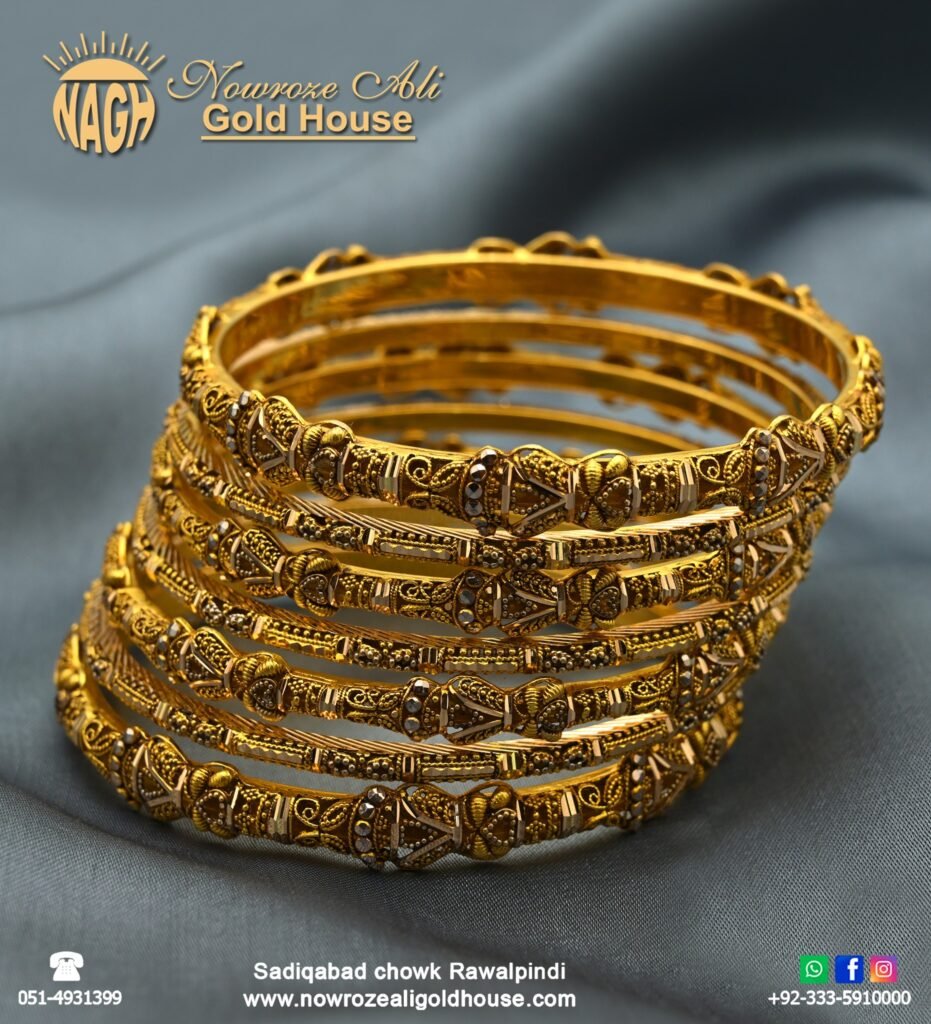
Filigree work involves intricate, lace-like patterns created by twisting and soldering fine gold wires. This delicate craftsmanship has been practiced by artisans in Rawalpindi for generations and produces bangles that are lightweight yet visually stunning. Filigree bangles are often preferred by younger women for daily wear due to their elegant yet subtle appearance.
Kundan and Meenakari Bangles
Kundan work involves setting stones or glass pieces into gold, while Meenakari refers to the colorful enamel work often paired with Kundan designs. These bangles are typically worn during weddings and festive occasions due to their vibrant and elaborate appearance. Rawalpindi’s jewelers are known for skillfully combining Kundan and Meenakari techniques to create bridal sets that are both traditional and eye-catching.
Antique and Temple Jewelry Style Bangles
Antique-style bangles, sometimes referred to as temple jewelry, feature motifs inspired by South Asian temple architecture and mythology. These designs often include images of peacocks, flowers, and other traditional symbols. This style has seen a resurgence in popularity in Rawalpindi as more women seek jewelry that connects them to cultural heritage.
Modern and Minimalist Bangles
For everyday wear, many women in Rawalpindi prefer simple, sleek gold bangles without elaborate designs. These minimalist bangles are lightweight, versatile, and can be worn with both traditional and Western outfits. Jewelers in Rawalpindi have responded to this demand by offering plain gold bangles in various widths and finishes, including matte, glossy, and brushed textures.
Bridal Sets
Bridal bangle sets are a significant category in their own right. These sets often include multiple bangles of varying widths, sometimes stacked together to create a fuller look on the wrist. Bridal sets are usually made from 22-karat gold, given the emphasis on purity for such significant occasions, and are often accompanied by matching necklaces and earrings.
Understanding Gold Purity and Karats
One of the most important aspects of buying gold bangles in Rawalpindi, or anywhere in Pakistan, is understanding gold purity. Gold is measured in karats, with 24-karat gold being the purest form. However, pure 24-karat gold is quite soft and not always suitable for intricate jewelry designs that need to withstand daily wear.
In Rawalpindi, most gold bangles are made from 21-karat or 22-karat gold, as these purities strike a balance between value and durability. 22-karat gold contains about 91.6 percent pure gold, mixed with small amounts of other metals like copper or silver to increase strength. 21-karat gold, which is slightly less pure, is also commonly used and tends to be slightly more affordable while still being considered high-quality.
It’s essential for buyers to ask jewelers for a hallmark or certification indicating the purity of the gold they are purchasing. Reputable jewelers in Rawalpindi’s markets typically stamp their gold products with purity marks, and increasingly, hallmarking practices are being adopted more broadly across the city to protect consumer interests.
Factors That Determine the Price of Gold Bangles
The price of gold bangles in Rawalpindi, as in the rest of Pakistan, is influenced by several factors that buyers should understand before making a purchase.
Gold Rate: The most significant factor is the prevailing gold rate, which fluctuates daily based on international market trends, currency exchange rates, and local demand. Since gold is often bought in tolas (a traditional unit of weight equal to approximately 11.66 grams) in Pakistan, buyers should check the current gold rate per tola before shopping.
Making Charges: Jewelers charge a making fee for the labor and craftsmanship involved in creating a bangle. This fee varies depending on the complexity of the design. Simple, plain bangles have lower making charges, while intricately designed bangles with filigree work, stone settings, or enamel work carry higher labor costs.
Design Complexity: As mentioned, more elaborate designs require more skilled labor and time, which increases the overall cost. Bridal sets with Kundan or Meenakari work, for instance, are generally more expensive than simple Kada bangles of the same weight.
Weight: Naturally, heavier bangles cost more since they contain more gold. Buyers should always confirm the exact weight of the bangles they are purchasing, as this directly affects the price.
Wastage Charges: Some jewelers in Rawalpindi apply a small wastage charge to account for gold lost during the crafting process. This is usually a percentage of the total weight and should be clearly explained by the jeweler.
Tips for Buying Gold Bangles in Rawalpindi
Purchasing gold bangles is a significant financial and emotional decision, and buyers in Rawalpindi should approach the process thoughtfully. Here are some practical tips to consider.
Research Current Gold Rates: Before visiting any jewelry market, check the current gold rate for the day, as prices can change daily. This helps buyers negotiate confidently and avoid overpaying.
Choose a Trusted Jeweler: Rawalpindi has many reputable, long-established jewelers who have built their reputation over decades. It is wise to buy from established shops with good reviews or personal recommendations rather than unfamiliar vendors, especially for significant purchases like bridal sets.
Ask for Certification: Always request a receipt or certificate that specifies the gold’s purity (karat), weight, and making charges. This documentation is important not only for verifying quality but also for future resale or exchange purposes.
Compare Multiple Shops: Rawalpindi’s markets, especially Sarafa Bazaar, house numerous jewelers in close proximity. It is worthwhile to visit a few different shops to compare designs, prices, and making charges before finalizing a purchase.
Understand Exchange and Buyback Policies: Many jewelers in Rawalpindi offer exchange policies, allowing customers to trade in old gold jewelry for new designs, sometimes with a small deduction for wastage. Understanding these policies in advance can be helpful for those looking to update older jewelry pieces into more modern styles.
Consider the Occasion: For everyday wear, lightweight and simple bangles are more practical, while for weddings and special occasions, heavier and more elaborately designed bangles may be preferred. Buyers should consider how frequently the bangles will be worn when selecting a design.
Negotiate Making Charges: While the gold rate itself is generally non-negotiable since it is tied to market prices, making charges can sometimes be negotiated, especially for larger purchases or during less busy shopping seasons.
Caring for Gold Bangles
Once purchased, proper care ensures that gold bangles maintain their shine and durability for years, or even generations, to come.
Gold bangles should be stored separately from other jewelry pieces, ideally in soft cloth pouches or individual compartments, to prevent scratching. Since gold is a relatively soft metal, especially in higher purities like 22-karat, it can be prone to scratches if stored carelessly alongside other jewelry.
Regular cleaning helps maintain the shine of gold bangles. A simple solution of mild soap and warm water, along with a soft brush, can be used to gently clean bangles, especially those with intricate designs where dust and dirt can accumulate in the crevices. After cleaning, bangles should be dried thoroughly with a soft cloth to prevent water spots.
It is advisable to remove gold bangles before engaging in activities that could expose them to harsh chemicals, such as swimming in chlorinated water, using household cleaning products, or applying lotions and perfumes directly onto the skin where the bangles rest. These substances can dull the shine of gold over time or affect any stones set within the bangles.
Periodic professional cleaning and polishing at a trusted jeweler can help restore the original shine of bangles that have been worn regularly. Many jewelers in Rawalpindi offer these services, often free of charge or at a minimal cost, especially for customers who purchased the jewelry from their shop.
The Role of Family and Tradition in Gold Bangle Selection
In Rawalpindi, as in much of Pakistan, the selection of gold bangles is often a family affair. Mothers, grandmothers, and other female relatives frequently accompany brides-to-be or young women to jewelry shops to help select designs, negotiate prices, and ensure that the chosen pieces align with family traditions and expectations. This communal approach to jewelry shopping reflects the broader cultural value placed on family involvement in major life decisions.
Many families in Rawalpindi also have jewelers they have trusted for generations, often the same shop that made jewelry for the bride’s mother or grandmother. This continuity fosters strong relationships between families and jewelers, built on trust, quality, and shared history.
Inherited gold bangles also hold significant sentimental value. It is common for older, heavier bangles passed down through generations to be redesigned into more contemporary styles while retaining the same gold, allowing families to honor tradition while adapting to modern tastes. Jewelers in Rawalpindi’s markets are often skilled at this kind of transformation, melting down older pieces and reshaping them according to current design trends without significant loss of material.
Gold Bangles as an Investment
Beyond their aesthetic and cultural value, gold bangles are widely regarded as a sound financial investment in Rawalpindi and across Pakistan. Given gold’s historical role as a hedge against inflation and currency devaluation, many families choose to invest their savings in gold jewelry rather than keeping cash reserves alone.
Gold bangles, in particular, are seen as a practical form of this investment because they can be worn and enjoyed while still retaining significant resale value. Unlike other forms of gold investment, such as bars or coins, bangles serve a dual purpose of adornment and financial security. This dual functionality makes gold bangles a preferred choice for many families in Rawalpindi when planning for future financial needs, including funding a child’s education, wedding expenses, or emergency funds.
It is worth noting, however, that when gold bangles are resold, the making charges paid at the time of purchase are typically not recovered, as resale value is generally based on the current gold rate and the weight of pure gold content. This is an important consideration for those viewing gold bangles primarily as an investment rather than a purely decorative purchase.
Conclusion
Gold bangles hold a cherished place in the culture, traditions, and daily lives of families in Rawalpindi. From the bustling lanes of Sarafa Bazaar to the modern showrooms along Bank Road, the city offers a rich and diverse selection of gold bangles catering to every taste, occasion, and budget. Whether it is a bride selecting her wedding trousseau, a mother gifting bangles to her daughter, or an individual investing in gold for future security, the significance of gold bangles extends far beyond their monetary value.
Understanding gold purity, market pricing factors, and proper care can help buyers make informed and confident decisions when purchasing gold bangles in Rawalpindi. With its long-standing jewelry markets, skilled artisans, and deep cultural appreciation for gold, Rawalpindi remains a vibrant center for those seeking beautiful, meaningful, and valuable gold bangles that will be treasured for years, and generations, to come.