


Introduction
Among the many forms of bangles and bracelets found across world cultures, few carry as much spiritual weight and layered meaning as the Kara. Traditionally a plain steel or iron bangle worn by Sikhs as one of the Five Ks—the physical articles of faith mandated by the Sikh religion—the Kara has, over time, also emerged in gold form, worn both by practicing Sikhs seeking a more ornamental version of their faith symbol and by people outside the Sikh community who are drawn to its clean, timeless design as a fashion accessory.
The Gold Kara sits at a fascinating intersection of religion, culture, tradition, and modern style. Understanding it properly requires looking at both strands of its story: the deep spiritual and historical roots of the Kara within Sikhism, and the more recent, broader adoption of the Kara-style bangle as a piece of gold jewelry admired for its simplicity and elegance. This article explores both dimensions in depth, along with practical guidance on styles, craftsmanship, purity, buying considerations, and care.
What Is a Kara?
The Kara is a circular bangle, traditionally unadorned and smooth, worn on the wrist. In its original and most sacred form within Sikhism, it is made of steel or iron rather than gold or silver, reflecting the values of humility, strength, and equality that are central to Sikh teachings. The word “Kara” itself comes from Punjabi and Sanskrit roots referring to a bracelet or armlet, and its circular, unbroken shape is central to its symbolism.
The Kara is one of the Five Ks (Panj Kakar in Punjabi)—five articles of faith that baptized Sikhs, known as Khalsa, are required to wear at all times. The Five Ks are:
- Kesh – uncut hair, symbolizing spirituality and acceptance of God’s will
- Kara – a steel or iron bangle, symbolizing eternity, restraint, and connection to God
- Kanga – a wooden comb, symbolizing cleanliness and discipline
- Kachera – cotton undergarments, symbolizing self-control and modesty
- Kirpan – a ceremonial sword or dagger, symbolizing courage and the duty to defend justice
These Five Ks were instituted by Guru Gobind Singh, the tenth Sikh Guru, in 1699, when he formally established the Khalsa, the collective body of initiated Sikhs, during the festival of Vaisakhi. Since that time, the Kara has remained a visible, constant marker of Sikh identity and commitment to the faith.
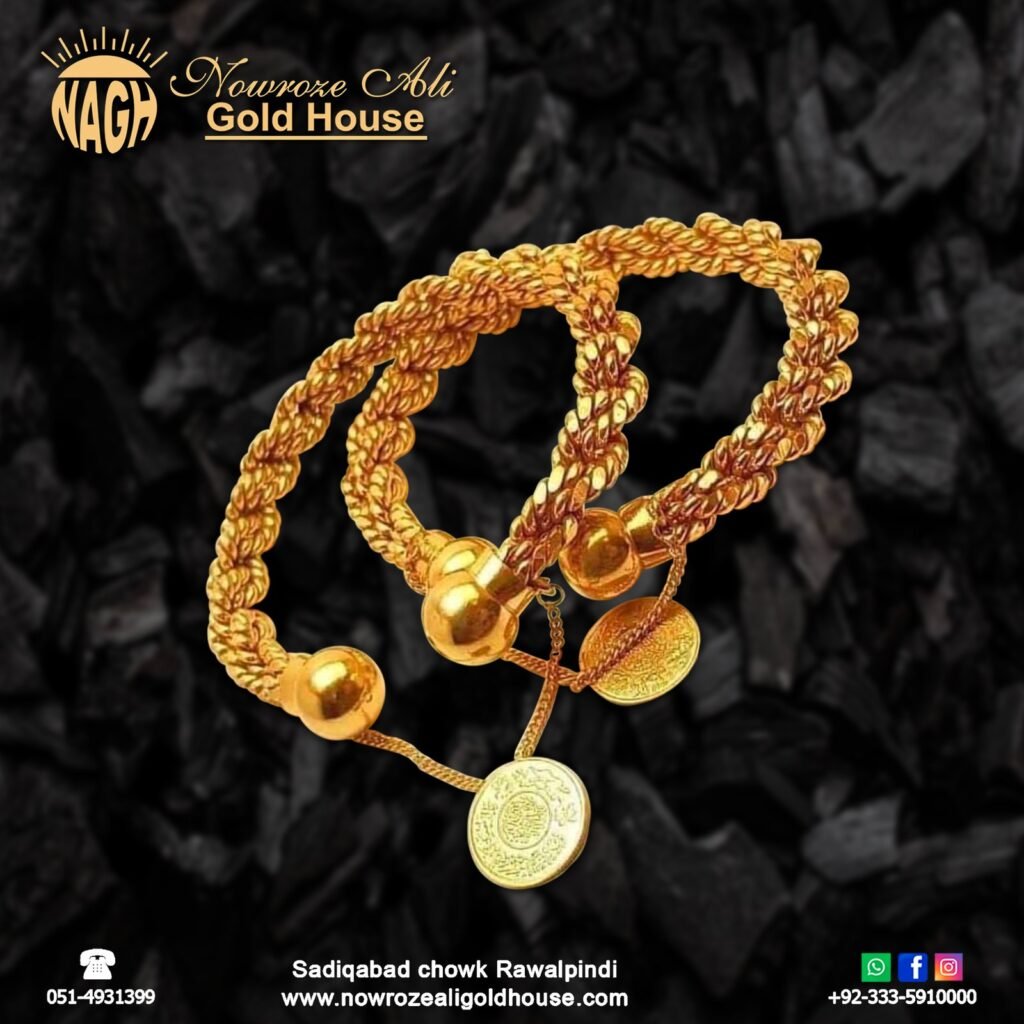
The Symbolism of the Gold Kara
The Kara’s symbolism is deep and multifaceted, and understanding it is essential to appreciating why the object—and its gold variations—carries such significance.
Unbroken Circle: The Kara’s circular shape, with no beginning and no end, is often interpreted as a symbol of the eternal and infinite nature of God, as well as the unbroken bond between the wearer and the divine. It serves as a constant, tangible reminder of this connection, worn on the hand that performs daily actions.
Restraint and Discipline: Traditionally worn on the dominant hand, the Kara is said to serve as a physical reminder to the wearer to act with restraint, to think before acting with that hand, and to avoid actions that would bring dishonor to oneself or one’s faith. In this sense, the Kara functions almost like a moral compass worn on the body.
Strength and Resilience: The traditional use of steel or iron, rather than a precious metal, reflects the values of strength, humility, and resilience that are central to Sikh philosophy. Unlike gold, which has historically symbolized wealth and status in many cultures, the plain steel Kara intentionally avoids any association with material wealth or class distinction, reinforcing the Sikh principle of equality among all people regardless of social or economic status.
Bond to the Community: Wearing the Kara visibly marks an individual as part of the global Sikh community (the Khalsa Panth), fostering a sense of shared identity, solidarity, and mutual responsibility among Sikhs worldwide.
A Reminder in Daily Life: Because it is worn constantly, on the wrist, in full view during nearly every daily activity, the Kara functions as an ever-present spiritual reminder, unlike garments or symbols that might only be worn during specific religious observances.
Traditional Materials: Why Steel or Iron?
It’s important to understand that in traditional Sikh practice, the religiously significant Kara is made from steel (sarabloh) or iron, not gold or silver. This is a deliberate and meaningful choice rooted in Sikh teachings, which emphasize humility, equality, and rejection of materialism and caste-based distinctions. Guru Gobind Singh and subsequent Sikh teachings have generally discouraged the use of gold or silver for the Kara specifically because these metals have historically been associated with wealth, vanity, and social hierarchy—values that stand in contrast to core Sikh principles.
For many devout and traditionally observant Sikhs, wearing a steel or iron Kara rather than a gold one is considered important precisely because it avoids these associations, ensuring that the symbol remains accessible and meaningful to all Sikhs regardless of economic background, and keeps the focus on spiritual devotion rather than material display.
The Emergence of the Gold Kara
Despite this traditional preference for steel and iron, gold Karas have nonetheless emerged and gained popularity over the years, worn by some Sikhs and by many people outside the Sikh community who are drawn to the design for cultural, aesthetic, or fashion reasons rather than strict religious observance.
Several factors have contributed to the emergence and popularity of the Gold Kara:
Cultural and Regional Practices: In certain regions and communities, particularly within the broader South Asian diaspora, gold Karas have become customary gifts during weddings, childbirth celebrations, or other significant family milestones, blending the traditional Kara form with the broader South Asian cultural affinity for gold jewelry as a symbol of celebration, prosperity, and familial bonds.
Fashion and Aesthetic Appeal: The Kara’s simple, elegant, unadorned circular design has broad aesthetic appeal beyond its religious origins. Its minimalist form translates naturally into fine jewelry, and many people—both within and outside Sikh communities—wear gold Kara-style bangles purely as a fashion statement, appreciating their clean lines and timeless look.
Personal Interpretation of Faith: Some Sikhs, particularly those who may not follow every traditional practice as strictly, choose to wear a gold Kara as a personal expression of their faith and heritage, even if it diverges from the more traditional steel or iron form preferred in orthodox practice.
Commercial Availability: As gold jewelry markets, particularly in India, the Middle East, and parts of the Sikh diaspora in the UK, Canada, and the United States, have grown, jewelers have increasingly offered gold Kara designs to meet consumer demand, whether for religious, cultural, or purely decorative purposes.
It’s worth emphasizing that this divergence in material—gold versus steel—reflects an important and sometimes debated distinction within the Sikh community itself, between the religiously mandated Kara (steel or iron) and the culturally or fashionably adopted Gold Kara, which for many observant Sikhs would not fulfill the specific religious requirement of the Five Ks, even if it carries similar symbolic or aesthetic value.
Understanding Gold Purity in Kara Design
For those seeking a Gold Kara as a piece of jewelry—whether for cultural, sentimental, or fashion reasons—understanding gold purity remains just as important as it is for any other gold jewelry purchase.
24 Karat Gold (24K): Pure gold at 99.9% purity, offering the richest color but the softest, most malleable structure. Because the Kara is a rigid, load-bearing bangle worn daily and subject to friction and impact, 24K gold is generally considered too soft for long-term durability in this form.
22 Karat Gold (22K): Containing about 91.6% gold, 22K is a traditional choice in South Asian and Middle Eastern jewelry markets, offering a rich golden hue with slightly improved durability over 24K, though still relatively soft for a bangle subjected to daily wear.
18 Karat Gold (18K): With 75% gold content, 18K gold offers a strong balance of rich color and improved durability, making it a popular and practical choice for a Gold Kara intended for regular wear.
14 Karat Gold (14K): Containing approximately 58.3% gold, 14K gold is prized for its excellent durability, making it well-suited to a bangle style that experiences constant friction against surfaces, clothing, and other objects throughout the day.
Given that a Kara is traditionally solid and rigid, rather than a flexible chain, the choice of karat has a particularly significant impact on its long-term durability and resistance to scratching, denting, or bending, making 14K or 18K gold common practical choices for those seeking a Gold Kara for everyday wear.
Design and Construction of the Gold Kara
While the traditional Kara is deliberately plain and unadorned, reflecting the Sikh values of humility and simplicity, Gold Kara variations produced for cultural or fashion purposes sometimes introduce subtle design elements, while others remain faithful to the minimalist original form.
Plain, Polished Bands: The most traditional and widely recognized Kara design features a smooth, rounded, unadorned band with a high polish finish, staying true to the original symbolic simplicity of the object.
Slightly Textured or Brushed Finishes: Some contemporary Gold Kara designs introduce subtle brushed or matte finishes, offering a more understated, modern aesthetic while retaining the classic circular bangle form.
Engraved Inscriptions: Certain Gold Karas, particularly those made for religious or ceremonial purposes, may feature subtle engravings of Sikh symbols, such as the Khanda (the emblem of Sikhism), or short inscriptions from Sikh scripture, adding personal or spiritual significance to the piece.
Sizing and Fit: Unlike many bangles designed to be decorative and loosely fitting, the traditional Kara is generally designed to fit somewhat snugly on the wrist, allowing it to be worn securely during all daily activities without frequently sliding off or requiring constant readjustment. This practical consideration carries over into gold versions intended for regular wear.
Craftsmen producing Gold Karas typically use casting techniques to form the basic circular band, followed by careful polishing, and in some cases, hand-finishing or engraving, to achieve the smooth, refined surface characteristic of the design.
Cultural Significance Beyond Sikhism
While the Kara’s most significant and well-documented origin lies within Sikh religious tradition, the broader circular bangle form has parallels and resonances in other South Asian cultural contexts as well, where gold bangles and kadas (a closely related term referring to thick, solid gold or silver bangles) are worn for a variety of cultural, ceremonial, and decorative purposes, independent of Sikh religious observance.
In broader Punjabi culture, for instance, gold bangles and kada-style bracelets are often exchanged during weddings and significant family celebrations, symbolizing prosperity, familial bonds, and blessings for the future, blending regional cultural practices with the broader South Asian affinity for gold jewelry as a marker of celebration and status.
This overlap—between the specifically religious Sikh Kara and the broader cultural tradition of gold kada-style bangles in South Asian communities—can sometimes create ambiguity in how the term “Gold Kara” is understood and used, depending on the context and community in question.
Buying Guide: What to Consider When Purchasing a Gold Kara
Given the layered significance of the Kara, prospective buyers should consider several important factors:
Understand the Intended Purpose: Determine whether the Gold Kara is intended to fulfill a specific religious observance (in which case, it’s worth consulting with knowledgeable community members or religious authorities, as many traditions specifically call for steel or iron rather than gold), or whether it is intended as a cultural, sentimental, or fashion piece.
Respect for Religious Significance: For those outside the Sikh community who are drawn to the Kara’s design for aesthetic reasons, it’s worth taking a moment to understand and respect its deep religious significance to Sikh communities, approaching the piece with cultural awareness and sensitivity.
Karat and Purity: As with any gold jewelry intended for regular wear, 14K or 18K gold is often recommended for durability, while higher karats may be reserved for ceremonial or special-occasion pieces worn less frequently.
Fit and Sizing: Because the Kara is traditionally worn snugly and consistently, careful attention to wrist measurement and sizing is particularly important to ensure comfort during extended daily wear.
Hallmarks and Certification: Always verify purity hallmarks and request certification from reputable jewelers, particularly for larger, solid gold pieces where the value is closely tied to weight and purity.
Craftsmanship and Finish: Given the design’s inherent simplicity, the quality of polish, smoothness, and overall finish plays an outsized role in the piece’s visual appeal, making craftsmanship an important consideration when comparing options.
Reputation of the Seller: Purchase from established, reputable jewelers, particularly those experienced in producing culturally or religiously significant pieces, to ensure both authenticity and appropriate craftsmanship.
Caring for a Gold Kara
Because the Kara is traditionally worn continuously, often without being removed for extended periods, proper care is particularly important to maintain its condition over time.
Regular Cleaning: Clean the Gold Kara periodically with a soft cloth and mild soap solution to remove oils, skin residue, and daily grime that can accumulate given its constant wear.
Mind Physical Activity: While the solid, rigid design of the Kara is relatively durable compared to more delicate jewelry, it can still become scratched or dented through repeated contact with hard surfaces, tools, or equipment, particularly during manual labor or certain sports.
Avoid Harsh Chemicals: Remove the Kara, when possible, before swimming in chlorinated water or using harsh household cleaning chemicals, as these can affect the surface finish over time, particularly in lower-karat gold alloys.
Periodic Polishing: Given the importance of a smooth, polished finish to the Kara’s traditional aesthetic, periodic professional polishing can help maintain its appearance, particularly for pieces worn daily over many years.
Sizing Adjustments: Because the Kara is traditionally worn snugly, changes in wrist size over time (due to weight fluctuations or other factors) may require professional resizing to maintain both comfort and the secure fit that is part of its traditional design purpose.
The Gold Kara as a Meaningful Gift
Across many South Asian and Sikh diaspora communities, the Gold Kara—whether worn for strict religious observance or broader cultural and sentimental reasons—is often given as a meaningful gift during significant life events. It is not uncommon for a Gold Kara to be gifted:
- To mark a child’s naming ceremony or early milestones
- As part of wedding jewelry exchanged between families
- To commemorate a significant achievement, such as a graduation or new job
- As a symbol of familial bonds and blessings, passed down from grandparents or parents to younger generations
In these contexts, the Gold Kara carries emotional and familial significance that extends beyond its material value, often becoming a cherished keepsake passed down through generations.

Modern Trends and Contemporary Adaptations
As with many traditional jewelry forms, the Gold Kara has seen various contemporary adaptations and reinterpretations in recent years:
Minimalist Fashion Adoption: The Kara’s simple, unadorned circular design has found broader appeal among fashion-conscious consumers outside the Sikh community, drawn to its clean, versatile aesthetic that pairs easily with both casual and formal attire.
Fusion Designs: Some contemporary jewelers have introduced subtle fusion designs, incorporating elements of the traditional Kara form with more contemporary bangle or cuff styles, appealing to younger generations seeking to honor cultural heritage while embracing modern aesthetics.
Gender-Neutral Appeal: True to its traditional role as a religious symbol worn by Sikh men and women alike, the Gold Kara maintains broad gender-neutral appeal in its modern iterations, worn by people of various genders as both a cultural and fashion statement.
Layering with Other Bangles: In some fashion contexts, a Gold Kara-style bangle is worn stacked or layered alongside other bracelets and bangles, blending traditional form with contemporary layering trends in jewelry styling.
A Note on Cultural Sensitivity
Given the Kara’s deep and specific religious significance within Sikhism, it’s worth approaching the Gold Kara—particularly when worn or purchased by those outside the Sikh community—with an awareness of its origins and meaning. For many Sikhs, the Kara is not merely a decorative object but a solemn article of faith, worn as part of a lifelong spiritual commitment. Appreciating the Gold Kara’s aesthetic appeal while remaining respectful of its religious roots allows for a more informed, culturally sensitive approach to this distinctive and meaningful piece of jewelry.
Conclusion
The Gold Kara occupies a distinctive space among the world’s many forms of bangles and bracelets, carrying within its simple circular form a rich and layered history rooted in Sikh faith, South Asian cultural tradition, and modern fashion sensibility. While the traditional, religiously mandated Kara remains crafted from steel or iron—chosen deliberately to reflect Sikh values of humility, equality, and restraint—the Gold Kara has emerged as a meaningful cultural and aesthetic variation, worn by many for reasons ranging from family celebration to personal style.
Understanding the Gold Kara requires appreciating both dimensions of its story: the profound spiritual symbolism of the original Kara within Sikh tradition, and the broader cultural and fashion appeal that has led to its adoption in gold form across South Asian communities and beyond. Whether chosen as a deeply personal expression of faith, a meaningful family gift, or simply an elegant, minimalist piece of jewelry, the Gold Kara continues to carry forward a tradition of symbolism, craftsmanship, and cultural significance that spans centuries, connecting wearers to a rich and enduring heritage with every turn of the wrist.