


For generations, the gold necklace has stood as one of the most cherished pieces of jewelry in Pakistani households, symbolizing celebration, tradition, and financial security all at once. In Rawalpindi, a city with a jewelry trade dating back well over a century, the gold necklace market continues to thrive, offering buyers an extraordinary range of choices shaped by skilled artisans, evolving fashion trends, and time-tested trading practices. Whether you’re preparing for a wedding, planning a milestone gift, or simply looking to invest in a piece that will last a lifetime, this handbook will walk you through the practical realities of buying a gold necklace in Rawalpindi, covering everything from purity standards and pricing to market selection and long-term care.
The Enduring Appeal of Gold Necklaces in Rawalpindi’s Culture
Gold jewelry occupies a unique position in Pakistani culture, and Rawalpindi is no exception. Necklaces, in particular, hold ceremonial importance at weddings, engagements, births, and other significant family milestones. It is common for gold necklaces to be passed down from mother to daughter, carrying with them not just monetary value but deep emotional and familial significance.
Rawalpindi’s jewelry trade has grown around this cultural demand, with entire neighborhoods historically dedicated to goldsmithing and jewelry trade. Many of the shops operating today are run by third or fourth-generation jewelers, whose family names have become synonymous with quality and trust within the local community. This heritage matters to buyers, as jewelry purchases in Pakistan are rarely impulsive; they are considered decisions often involving multiple family members and careful deliberation over design, purity, and price.
The city’s status as a twin city to Islamabad also brings a broader customer base into its gold markets, with buyers traveling from the capital and nearby districts to take advantage of Rawalpindi’s competitive pricing and wide selection, particularly for necklaces intended for weddings and other major celebrations.
Types of Gold Used in Rawalpindi Necklace Making
Understanding gold purity is the foundation of making an informed necklace purchase. Gold purity is expressed in karats, with the scale running up to 24 karats representing pure, unalloyed gold.
24 Karat Gold: This is gold in its purest form. While it has an unmistakably rich, deep yellow hue, 24K gold is generally too soft to hold intricate necklace designs without bending or losing shape over time, and is therefore rarely used for necklace crafting, appearing more often in gold bars or coins.
22 Karat Gold: The standard for most necklaces sold across Rawalpindi, 22K gold contains around 91.6% pure gold blended with small amounts of alloy metals such as copper or silver. This composition provides the rich color associated with traditional gold jewelry while offering enough structural strength to support detailed necklace designs, including chains, pendants, and elaborate bridal sets.
21 Karat Gold: A slightly more affordable alternative to 22K, this purity level is also widely available in Rawalpindi’s markets and remains a popular choice for buyers seeking a balance between richness of color and cost efficiency.
18 Karat Gold: With 75% pure gold content, 18K gold offers greater durability due to its higher alloy content, making it a preferred choice for necklaces that incorporate diamonds or other gemstones, as the added strength better secures stone settings over time.
It’s worth noting that purity expectations can vary depending on whether you’re shopping in a traditional bazaar setting or a branded showroom, so always ask for verification and, where possible, request a certificate or hallmark confirming the karat value of your chosen necklace.
Breaking Down the Cost of a Gold Necklace
The final price tag on a gold necklace in Rawalpindi is influenced by several distinct factors, and understanding each one allows buyers to shop smarter and negotiate more effectively.
Daily Gold Rate: Gold prices are not fixed; they shift daily in response to international market movements, currency fluctuations, and local supply and demand. Rates are typically quoted per tola (roughly 11.66 grams) or per gram, and checking the current rate before shopping gives buyers a reliable baseline for price comparison.
Necklace Weight: Heavier necklaces naturally cost more, as they contain a greater quantity of gold. Necklace weight can range dramatically, from delicate, lightweight chains to substantial bridal sets weighing several tolas.
Making Charges: This covers the labor and craftsmanship that goes into transforming raw gold into a finished necklace. Making charges vary considerably based on design intricacy, with simple chain designs commanding much lower charges than elaborate, hand-crafted bridal pieces featuring detailed engravings or stone work.
Design and Artistic Detailing: Necklaces featuring filigree work, Kundan settings, Meenakari enamel detailing, or antique finishing techniques require specialized skills and additional crafting time, which is reflected in higher making charges compared to simpler, more streamlined designs.
Gemstone and Embellishment Costs: If a necklace incorporates precious or semi-precious stones, pearls, or other decorative elements, these are priced separately based on their quality, size, and rarity, adding to the overall cost beyond the base gold price.
Buyers should always request a clear, itemized breakdown separating the cost of gold from making charges and any additional embellishments, as this transparency is key to both understanding fair pricing and identifying room for negotiation.

Necklace Styles Favored by Rawalpindi Buyers
Rawalpindi’s gold markets cater to an impressively diverse range of tastes, spanning deeply traditional designs to contemporary, minimalist styles.
Rani Haar (Queen’s Necklace)
Among the most iconic traditional designs, the Rani Haar is a long, elaborate necklace often reaching down to the chest or waist, featuring intricate goldwork and sometimes layered strands. Historically worn by royalty, this style remains a popular choice for brides seeking a grand, statement-making piece for their wedding day.
Choker-Style Necklaces
Sitting snugly at the base of the neck, choker necklaces have gained considerable popularity among younger buyers looking to blend traditional gold craftsmanship with more modern, fashion-forward silhouettes. These pieces often feature clean lines or contemporary geometric patterns that pair well with both Eastern and Western attire.
Layered Chain Necklaces
Inspired by global jewelry trends, layered necklaces featuring two or three strands of varying lengths have found a growing audience in Rawalpindi. This style allows for versatility, as pieces can be worn together for a fuller look or separated for more understated everyday wear.
Temple Jewelry-Inspired Necklaces
Drawing inspiration from South Asian temple architecture and religious iconography, these necklaces often feature intricate figures, floral motifs, and detailed goldwork, appealing to buyers interested in heritage-inspired designs with cultural depth.
Simple Pendant Necklaces
For everyday wear, many buyers in Rawalpindi favor understated gold chains paired with a single decorative pendant, whether a religious symbol, initial, or minimalist ornamental design. These pieces offer versatility and are often chosen as meaningful gifts for birthdays, graduations, or other personal milestones.
Kundan and Polki Necklace Sets
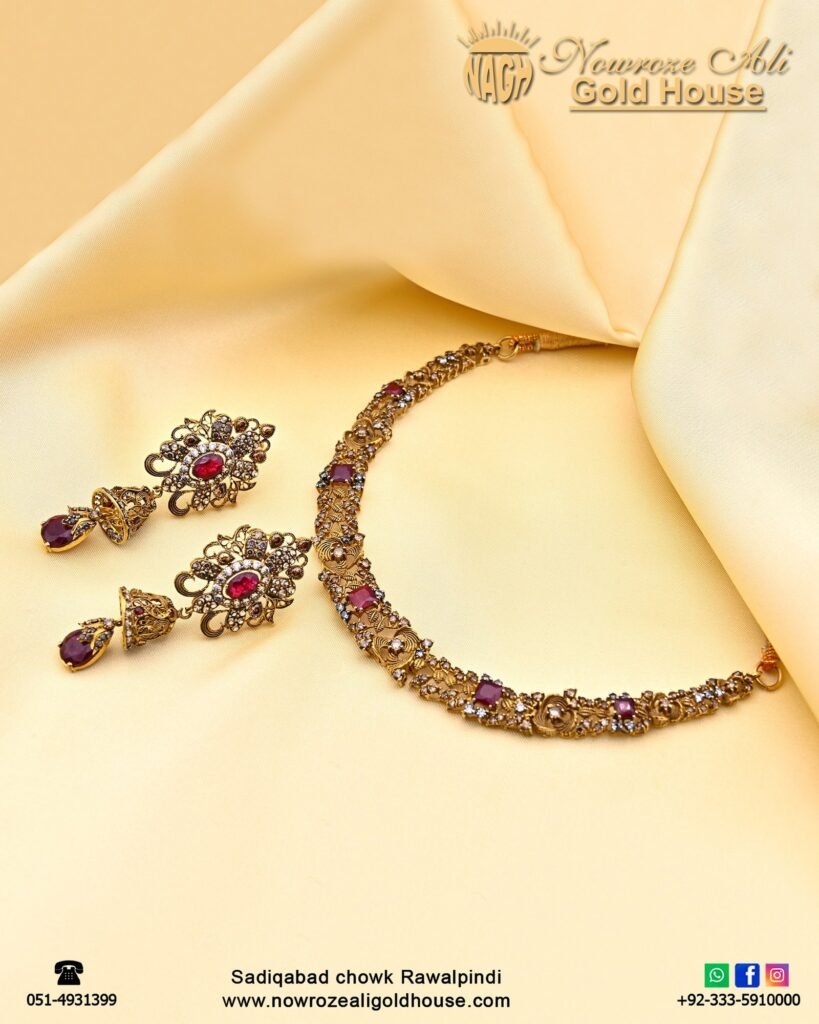
Popular for bridal and formal occasions, these necklaces combine gold with Kundan (glass or crystal stones set in gold foil) or Polki (uncut diamonds) to create a luxurious, statement-making effect often reserved for weddings and other major celebrations.
Antique Finish Necklaces
For buyers drawn to a vintage aesthetic, antique-finish necklaces replicate the look of heirloom jewelry through a matte or slightly oxidized gold treatment, often combined with traditional design elements for a distinctly nostalgic and regal appeal.
Navigating Rawalpindi’s Key Gold Markets
Several distinct areas within Rawalpindi serve as primary destinations for gold necklace shopping, each offering a slightly different experience.
Sarafa Bazaar
As the most established and widely recognized gold market in the city, Sarafa Bazaar is home to hundreds of jewelry shops, ranging from small family-owned businesses to larger, well-established establishments. The dense concentration of shops allows buyers to easily walk between stores, comparing designs, pricing, and craftsmanship within a compact area, making it an ideal starting point for necklace shopping.
Raja Bazaar
One of Rawalpindi’s oldest and busiest commercial districts, Raja Bazaar hosts a substantial number of gold and jewelry shops alongside its famous textile and general merchandise markets. While the environment tends to be more crowded and bustling, this bazaar offers competitive pricing and an extensive selection of both traditional and contemporary necklace designs.
Commercial Market, Satellite Town
Buyers seeking a more organized, showroom-style experience often turn to Commercial Market in Satellite Town, where several branded jewelry outlets offer fixed pricing structures, authenticity documentation, and a curated selection of designs, appealing to those who prefer a straightforward, no-haggle shopping experience.
Bank Road
This area combines the charm of traditional jewelry shopping with more structured retail practices, hosting several established jewelry brands known for transparent pricing and professional customer service.
Cantt Area Showrooms
Rawalpindi’s Cantonment area features a number of upscale jewelry showrooms catering to buyers seeking premium, contemporary necklace designs, often with additional services such as custom design consultations and higher-end craftsmanship options.
Effective Negotiation Strategies for Necklace Buyers
Negotiation remains a deeply embedded part of the jewelry shopping experience in Rawalpindi, and informed buyers can often secure meaningfully better deals through a few key strategies.
Check the Daily Gold Rate in Advance: Before visiting any shop, look up the current gold rate through reliable local sources. This gives you a clear benchmark for evaluating whether a jeweler’s pricing is fair and market-aligned.
Visit Several Shops Before Deciding: Rather than purchasing from the first shop you visit, take time to explore multiple jewelers, particularly within bazaars like Sarafa Bazaar where comparison shopping is convenient. This helps ensure you’re getting competitive pricing while also giving you a broader sense of available design options.
Separate Gold Cost from Making Charges: Always ask jewelers to break down the total price into gold cost, making charges, and any additional embellishment costs. This transparency allows you to negotiate each component individually, with making charges typically offering more room for adjustment.
Shop During Quieter Periods: Demand for gold necklaces tends to spike during wedding season, often driving up both pricing and making charges due to increased jeweler workloads. If your purchase timeline allows flexibility, shopping during off-peak periods may yield better negotiating opportunities.
Cultivate a Relationship with a Trusted Jeweler: Many Rawalpindi families maintain long-standing relationships with specific jewelers, sometimes spanning multiple generations. These relationships often translate into preferential pricing, priority service, and greater flexibility regarding customization or future exchanges.
Ask About Exchange and Buy-Back Policies: Reputable jewelers typically offer buy-back or exchange services, allowing older gold pieces to be traded in toward a new necklace purchase. Understanding these policies beforehand helps you better assess the long-term value of your purchase.
Confirming Authenticity Before You Buy
Given the considerable financial investment involved, verifying the authenticity of your gold necklace purchase is an essential step that protects both your money and peace of mind.
When purchasing, always request:
A Purity Hallmark or Certificate: Confirming the karat value of the gold used in your necklace.
A Comprehensive Receipt: This should detail the necklace’s weight, karat purity, the applicable gold rate on the day of purchase, and a clear breakdown of making charges and any gemstone costs.
Clarity on Return and Exchange Terms: Understanding your options should you need to return, exchange, or resize the piece in the future.
For particularly high-value purchases, some buyers opt for independent verification through a certified gold testing service, providing an additional layer of confidence, especially valuable for those less familiar with the nuances of Rawalpindi’s jewelry market.
Maintaining the Beauty of Your Gold Necklace
Proper maintenance ensures your gold necklace retains its shine and structural integrity for years, or even generations, to come.
Store With Care: Keep your necklace in a soft cloth pouch or a lined jewelry box, ideally separated from other pieces to prevent scratching or tangling of chains.
Limit Exposure to Chemicals: Perfumes, lotions, and cleaning agents can gradually dull gold’s natural luster. It’s best practice to apply beauty products before putting on your necklace, rather than after.
Clean With Gentle Methods: A soft cloth combined with mild soapy water is typically sufficient for routine cleaning. Avoid harsh or abrasive materials that could scratch the surface or damage delicate detailing.
Remove During Strenuous Activity: Physical activities such as exercising, swimming, or heavy manual work increase the risk of damage or accidental loss, making it wise to remove your necklace beforehand.
Take Advantage of Professional Servicing: Many Rawalpindi jewelers offer complimentary or low-cost polishing and cleaning services for necklaces purchased from their shop, helping preserve the piece’s original brilliance over time.
Gold Necklaces as Both Adornment and Investment
Beyond their aesthetic and cultural value, gold necklaces are widely regarded as a practical financial asset across Pakistan, including in Rawalpindi. Given gold’s historical tendency to retain and often appreciate in value over time, many families view necklace purchases, particularly bridal sets, as a meaningful long-term investment rather than a purely decorative expense.
This dual role often shapes buying decisions, with many buyers favoring classic, versatile designs likely to remain both stylish and valuable for decades, as opposed to highly trend-driven pieces that may lose their appeal more quickly. This investment mindset is particularly evident in the enduring popularity of traditional design elements passed down through generations of Rawalpindi’s jewelry-making families.
Timing Your Purchase Around Seasonal Trends
Rawalpindi’s gold market experiences noticeable seasonal fluctuations that savvy buyers can use to their advantage. Wedding season, typically concentrated in the cooler winter months and around major holidays, brings a surge in demand for bridal necklace sets, often resulting in higher prices and increased making charges due to jeweler workload.
In contrast, quieter periods, often during the summer months, may present more favorable conditions for negotiation as foot traffic slows. Additionally, monitoring daily international gold price movements can help buyers identify advantageous windows for making their purchase, particularly for those without a fixed, time-sensitive deadline.
Custom-Made Necklaces: A Personal Touch
Many jewelers throughout Rawalpindi offer custom design services, allowing buyers to create a necklace that reflects their individual vision or commemorates a specific occasion. The process generally begins with a consultation, where buyers share design inspiration, whether drawn from a catalog image, a family heirloom, or an entirely original concept.
Following this discussion, jewelers or in-house designers typically present a design proposal, sometimes accompanied by sketches, before moving forward with the crafting process. Customization allows for deeply personal touches, such as incorporating specific gemstones, engraved details, or design elements with particular family or cultural significance.
Some buyers also choose to bring in old or unused gold jewelry to be melted down and reworked into an entirely new necklace design, a practical approach that allows sentimental or inherited gold to be preserved in a form better suited to current tastes and lifestyle needs.
Bringing It All Together
Buying a gold necklace in Rawalpindi is an experience woven into the fabric of the city’s long-standing commercial and cultural history. From the historic lanes of Sarafa Bazaar to the more contemporary showrooms found along Bank Road and in Commercial Market, Rawalpindi’s gold markets offer remarkable variety, catering to every budget, design preference, and occasion imaginable.
Armed with a clear understanding of gold purity standards, pricing structures, and effective negotiation techniques, buyers can approach their necklace purchase with genuine confidence, ensuring they walk away with a piece that delivers both lasting beauty and sound financial value. Whether you’re selecting an elaborate bridal set steeped in generations of craftsmanship or a simple, elegant chain meant for everyday wear, Rawalpindi’s gold markets, shaped by decades of skill and tradition, offer something meaningful for every buyer.
As always, taking the time to research current market rates, visit multiple shops, and ask thoughtful questions will help ensure that your gold necklace purchase in Rawalpindi becomes not only a treasured addition to your jewelry collection, but also a wise and rewarding long-term investment.